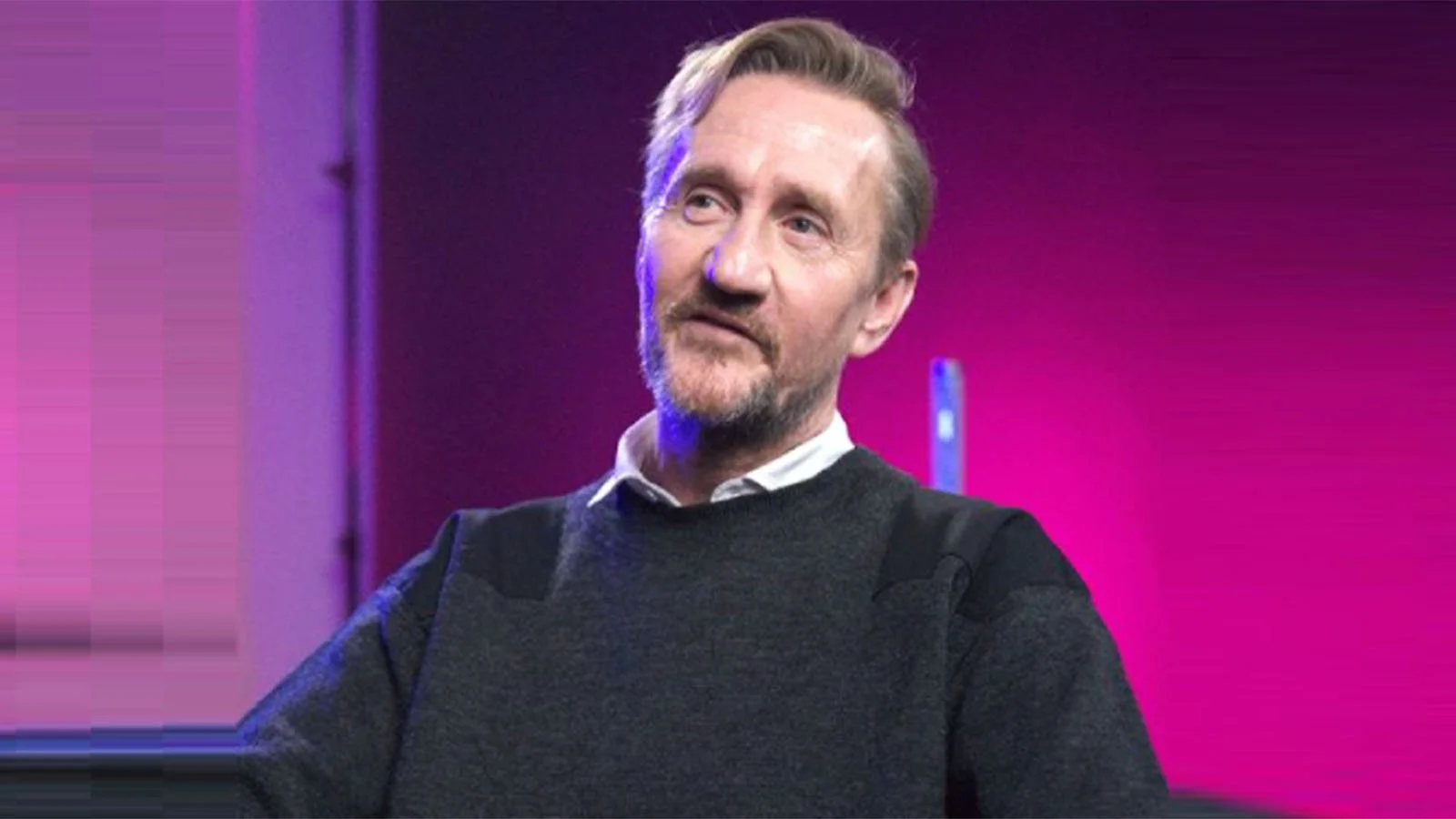
In an age where organisations face constant disruption and the race for innovation never stands still, Simon Morris stands out as a proven navigator of transformation.
With a career marked by strategic foresight, digital agility and commercial success, he understands what it takes for businesses to evolve — and thrive — in volatile environments.
As a seasoned business speaker, Morris draws not only on decades of executive experience but also on a deep understanding of market dynamics, leadership under pressure and sustainable growth.
Film News Blitz presents this exclusive interview with the Inspirational Leadership Speakers Agency, where he shares not just his roadmap for success, but a framework for resilience, adaptability and forward-looking leadership.
Q. How has your lifelong connection to storytelling influenced the direction of your career?
Simon Morris: “I think it was my natural disposition. I was always from an early age interested in TV.
“I think when I had a job as a paper boy, the first, um, age 11, the first thing I did was buy an old black and white TV and, you know, at all hours consume content from an interest of content making and storytelling, um, rather than just being a, you know, square.
“They used to say when I was a kid, if you watch too much TV, you’ll get square eyes. But for me, it was, you know, just this content revolution that was going on.
“And I think the narrative of a good video game was about storytelling.
“I learned in advertising very early on that, you know, you can tell people the facts and give information, or you can… people will, consumers will, audiences will respond to storytelling.
“It’s as old as the hills. You know, if you look at the cave dwellings they found in France that are the oldest record of human existence, they had shelter, fire, warmth, protection, and they had cave drawings on the walls.
ALSO CHECK OUT: Film news: ‘One Battle After Another’ ignites Oscars race with Gotham Awards win
“And I always say, you know, that’s indicative of the fact that people are using imagination and emotional storytelling as long as we’ve been walking this earth.
“And instinctively I always knew that emotional storytelling in advertising was a better connector and therefore more effective.
“Um, subsequently in later years, you know, proved that at Amazon. We proved that beyond all doubt. But I think I knew that in the ’90s and was very influenced by the great British advertising revolution.
“This country’s always punched above its weight, if not been the world leader in advertising.
“Um, I had a mentor, Sir John Hegarty, founder of BBH, who always encouraged me in whatever I did to be looking to create an emotional connection and that’s what you do through storytelling.
“So it was my natural disposition and then all of the businesses that I’ve been involved in have been optimised through that.
“You know, whether it’s games or whether it’s multi-channel television, whether it is, uh, Love Film was created as a brand from day one for… you know, we always said Love Film is a company created by people who love film for people who love film, and so we felt it was incumbent upon ourselves to, um, lean into the storytelling aspect.
“We weren’t just a service provider. It wasn’t just a cold unemotive service.
“It was always… We always covered new releases. We covered what people… we were very keen on reviews and then that’s something that I took into Amazon.
“And I think my time, which was a privilege working for the senior leadership and for Jeff himself, was very much about how we could do better by establishing an emotional connection through storytelling.
“Which we did, you know, in every category at Amazon and, you know, through big platforms like the Super Bowl through to Q4 Christmas advertising, um, through to new categories that we launched.
YOU MAY BE INTERESTED IN: Podcast: ‘A Friendly Film Take’ – ‘Predator Badlands’, ‘Star Trek’ and ‘The Mummy 4’
“It was very much the thing.
“So that’s… it was something I was predisposed to anyway, intuitively followed, led, was encouraged by a mentor, and then subsequently, you know, it was successful.
“It was successful in everything I did and that was ultimately proved scientifically and vindicated in my time at Amazon.
“Powerful. So powerful. And ultimately, as I say, we scientifically proved it at Amazon and, um, you know, I think that’s why in my later life I’m invested in literally, emotionally and financially invested in companies that are doing that.
“Novel is all about great storytelling in the podcast arena.
“DO is about using contemporary science and AI to help people optimise great storytelling. Um, you know, the mental health business I’m involved in as chairman, Jack, is, um, very content driven.
“It’s not science driven. It’s content driven to establish connection. And so I, you know, why fight it? That’s, that’s… I’m… every fibre in my body leans towards it.
“It’s scientifically proven. And so that’s what gets me out of bed.”
READ MORE: Film news: James Cameron prepared to end ‘Avatar’ franchise after ‘Fire and Ash’
Q. What sparked the creation of LoveFilm, and how did that journey evolve into the foundation of Prime Video?
Simon Morris: “Well, Love Film was, um, a sort of big bang. There were a few entrepreneurs.
“There was a, um, very entrepreneurial, um, finance company, uh, venture capital company called Arts Alliance run by, um, Thomas Høegh who pulled everything together.
“A fledgling technology platform, um, built by two entrepreneurs from their kitchen table. Um, that was the technology base that we started with.
“The investment company, V… um… VC venture capital company and a couple of individuals, myself and Mark Livingston, all came together in this big bang.
“So, Love Film was created. Really, we were just very aware of how this new category of entertainment, DVD by post, um… efficient distribution that gave people three things.
“It gave them range. It gave them, as in selection, as in a wide choice.
“It gave them convenience. It came to them in envelopes at home. They didn’t have to go to a shop which shut, or they certainly didn’t get charged late fees which was the business model at the time by Blockbuster.
“Uh, and it was great value. And so I think we knew those three things.
“It was the right group of people that came together with all of the right component parts, different skill sets, financial backing, um, and we just went hell for leather to establish ourselves in that category.
“We were very influenced by what Netflix was doing in the States.
“Anyone who says differently is probably, um, not being economical with the truth because they were an established model that was doing great things in the States.
YOU MAY ALSO LIKE: Film news: ‘28 Years Later: The Bone Temple’ launches new trailer ahead of January release
“So that’s how we came together. And I think being… We were, as a group of individuals and as a business, we were relentless, really driven, really focused on the customer, really focused on those things: selection, value, uh, and convenience.
“And we gave added value in terms of the content and storytelling that we did around programming.
“We encouraged the community aspect to it, which I don’t think had been done in that space before.
“People writing reviews, talking about films, recommending. So we had true scores on the films rather than scores that had been given perhaps by a journalist or by the studios themselves.
“And so I think we, um, the relentlessness of what we were doing was that we knew that sooner or later the business was going to move to digital, to a pure digital play.
“And we pioneered that. So, if you Google, um, I think it was King Kong, I think it was about April 2008, Love Film had built a digital player and we were the world’s first completed digital download-to-own with an official licence.
“And so that period of transition from physical goods by post to pure digital probably took longer than people forecast initially, but when it came it came a lot quicker.
“People’s, um, shift towards consuming through streaming, um, and digital platforms came… took longer but when it did, boy did it come quickly.
“And so we pioneered the move away from physical subscription to streaming subscription and streaming delivery.
“And we… so we went… at first we were a hybrid company 2008 to 2011, and then ultimately we became a fully streaming business.
“When Amazon acquired Love Film, it was with a view to turning the Love Film Player into what is now the Prime Amazon video player.
“I’m sure it’s changed through many technology advances since then, but the first iteration of the… I think it was called Amazon Prime Instant Video was a rebranded Love Film Player.”
This exclusive interview with Simon Morriswas conducted by Jack Hayesof The Motivational Speakers Agency.
READ NEXT: TV news: Russell T Davies – ‘I know exactly what happens’ in ‘Doctor Who’ 2026 Christmas special