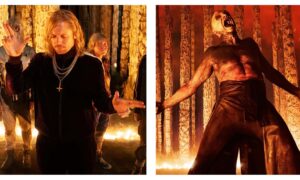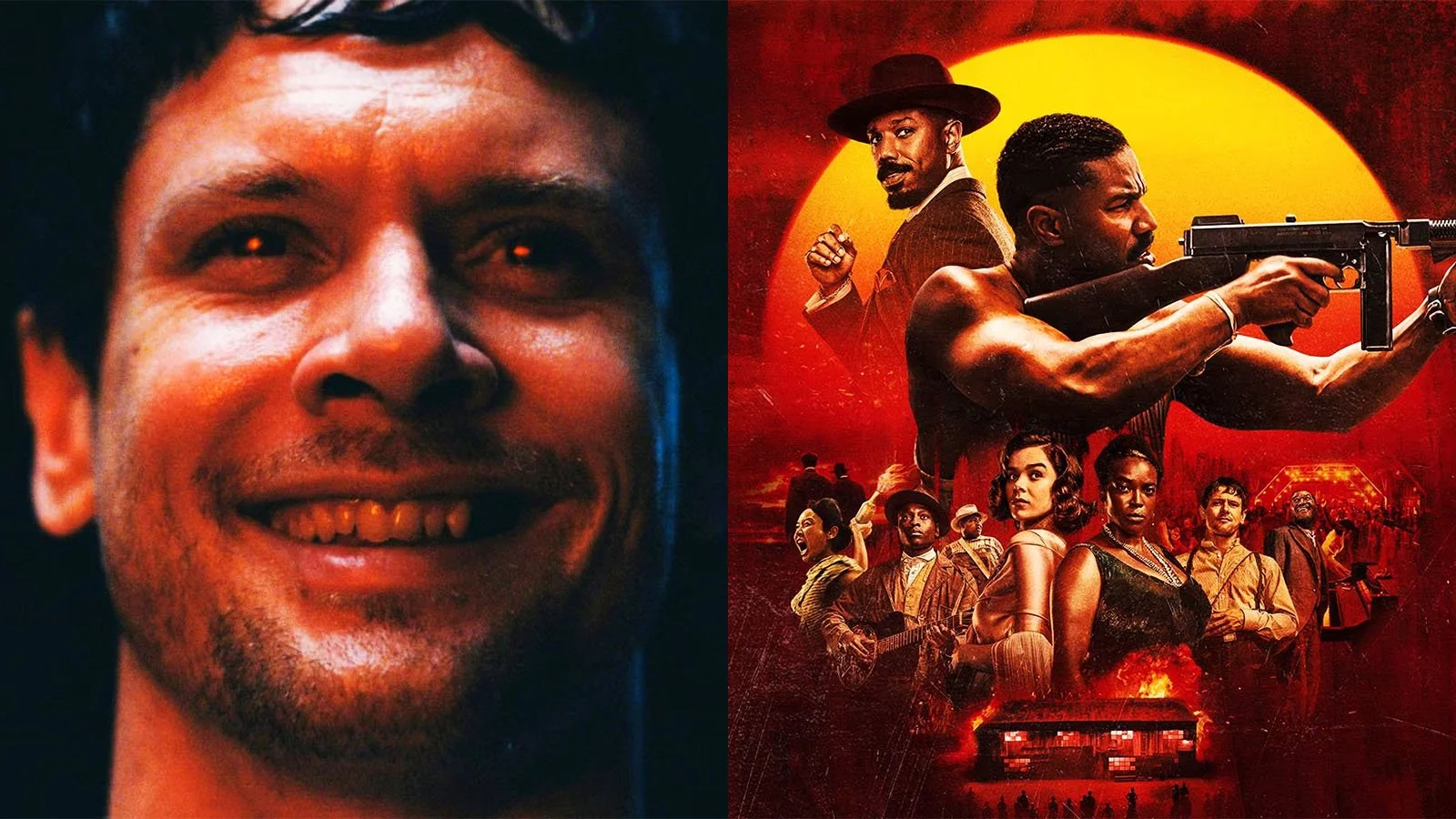
Sinners is a horror film that appears at first glance to be about vampires invading a Southern Black community, but beneath that premise lies a very intentional and symbolic racial story.
What makes the film more complex is its choice to make the primary vampire figure Irish, a decision that is not decorative, but rather anchored in real historical and racial dynamics.
Film News Blitz’s Anna Ferraz analyses all the notable, nuanced concepts in Ryan Coogler’s hit-sensation, Sinners.
Race, culture & ethnic history
Sinners uses its Irish vampire antagonist, Remmick, as a racial metaphor rather than a simple character trait.
Historically, Irish immigrants in America were once marginalised but later assimilated into “whiteness”, gaining access to social power.
The film draws on this history to show how someone shaped by oppression can later benefit from and reproduce it, aligning with ideas of ‘whiteness’ as social capital and racial assimilation.
Historically, Irish immigrants in the United States arrived as outsiders.
They were racialised as inferior, often depicted as uncivilised and socially undesirable. Over time, however, the Irish began to gain access to privilege, social capital and protection.
This arc of exclusion and subsequent acceptance becomes the foundation of the antagonist’s identity in Sinners.
The film uses his Irishness not as a cultural quirk, but as a reminder that ‘whiteness’ is not fixed; it is something that can be gained and strategically performed.
In the movie, this Irish vampire embodies ‘whiteness’ as social capital.
His power comes not only from immortality but from his alignment with white authority.
There is an unsettling irony in the fact that someone whose original cultural history stems from oppression now weaponises power against a community still subjected to racial violence.
This phenomenon fits into what critical race scholars call intra-group oppression – the reproduction of harm by one historically marginalised group upon another.
READ MORE: Film awards: ‘Sinners’ leads Critics Choice nominations with 17 nods
Diverse, cultural blend and impact
The film heightens this symbolism through culture.
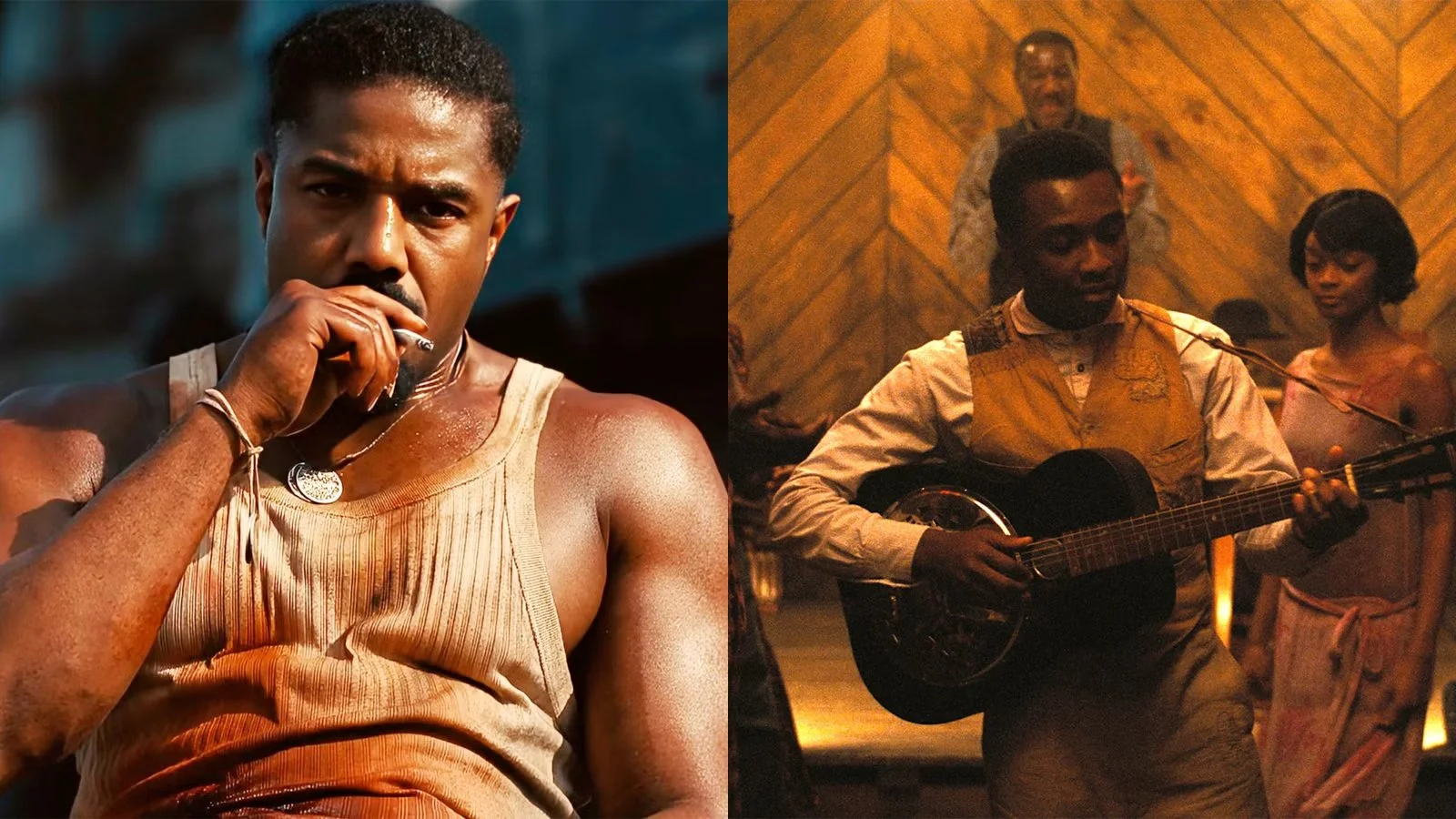
Traditional Irish music and dance appear at key plot moments, contrasted intentionally against Black musical traditions rooted in gospel, blues and communal expression.
What emerges is a clear act of cultural extraction. The vampire is not simply consuming bodies; he is feeding off the vitality, talent and creativity of the community.
The metaphor is sharp: just as Black musical forms were historically mined by white industries for profit, the vampire drains the community of what makes it vibrant and alive.
Conceptualising the idea of ‘racial assimilation’
This links to another key racial concept: racial assimilation.
When the vampire appears in community spaces, he adopts the surface-level aesthetics of belonging without actual solidarity.
He stands close to the culture without ever being inside of it, demonstrating what scholars term proximity to ‘whiteness’ – the strategic alignment with dominant racial identity for personal gain.
Where Sinners succeeds is in making these ideas felt rather than merely spoken. Horror becomes a vehicle for racial commentary.
The vampire is not just a supernatural villain; he represents a historical pattern, one in which power shifts over time and is often used to extract value from Black communities.
Therefore, ‘Irishness’ is not accidental; it is a reminder that the oppressed do not always choose empathy. Sometimes, they choose assimilation, domination and consumption.
YOU MAY ALSO LIKE: Film news: Milly Alcock takes centre stage in DC’s ‘Supergirl’ trailer
Music selection is no coincidence, it’s by design
Music plays a crucial role in reinforcing this symbolism.
Irish folk music carries its own history of resistance, displacement, and colonial oppression, much like Black American musical traditions such as blues and gospel.
By placing these musical forms in tension, the film highlights how music becomes a site of power rather than just expression.
The vampire’s Irish songs and dance traditions enter the Black community not as solidarity, but as intrusion.
This contrast turns music into a metaphor for cultural extraction.
Just as “black music” has historically been appropriated, repackaged, and profited from by white industries, the vampire feeds on the community’s cultural energy while remaining detached from its lived struggle.
His proximity to the culture masks exploitation rather than connection.
By grounding its horror in the historical politics of music and race, Sinners transforms vampirism into a metaphor for racialised consumption.
The Irish element, especially through music, exposes how cultural histories can be repurposed to justify dominance instead of shared resistance.
A groundbreaking, poignant telling rooted in societal realism
Sinners is not only a frightening story – it is a commentary on how culture, identity and belonging are negotiated through power.
The film invites audiences to look at vampirism not just as blood-drinking, but as a metaphor for racialised consumption.
And in that reading, its horror feels disturbingly familiar.
READ NEXT: Netflix news: Streaming giant ‘deeply committed’ to Warner Bros. cinema releases